This ornately-decorated 12"x7"x4" wooden box is frequently used by guildmasters to send items to random places, so that low-ranking guild members may be tested by requiring them to find the item.
The front of the box has two buttons and a dial. The buttons are labeled "Send Object" and "Retrieve Locating Stone"; the dial is labeled "Radius" and may be set to 5 feet, 50 feet, 500 feet, 1 mile, 10 miles, 100 miles, and 1000 miles.
If the box is closed and "Retrieve Locating Stone" button is pressed, the locating stone (a non-magical and otherwise uninteresting pebble) appears inside the box.
If the box is closed and "Send Object" is pressed, anything inside the box is sent to a random location within the dial-specified radius of the locating stone.
The locating stone can be sent away by the box like any object. If the locating stone is destroyed, the box keys off the last known location of the locating stone, before it was destroyed, and creates a new locating stone if "Retrieve Locating Stone" is pressed.
Moderate conjuration; CL 10th; Craft Wondrous Item, locate object, teleport; price 1500 gp; weight 5 lb.
Tuesday, August 30, 2011

Wednesday, August 10, 2011
Cursed Item Design
A good basic principle of cursed items is this: take a standard item, and make it do what it's supposed to do except not quite right, or make it do something ironic in addition to the intended effect. Go for things that work just fine, if you're okay with the side-effects.
Examples, just looking through the Magic Item Compendium and coming up with things off the top of my head:
Also consider cursed coins - nobody ever thinks to detect magic the money!
Examples, just looking through the Magic Item Compendium and coming up with things off the top of my head:
- A bear helm that also transmits werebearism
- A belt of growth that makes you grow, but none of your items grow with you. Any armor and clothes worn (except the belt) are destroyed, and your weapon still does its original damage
- A blindhelm that also makes you permanently blind
- Bracers of opportunity that provoke an attack of opportunity every time you use them
- A cloak of the salamander that has a 50% chance of setting its wearer on fire (doing the listed fire damage every round until the wearer is dead or immersed in water) every time they activate it
- A hair shirt of suffering that damages the wearer (by the same amount healed) every time they use its healing ability
- A ring of negative protection that, instead of protecting you from negative energy, instead grants negative protection (i.e., vulnerability) to all forms of energy
- A shirt of the leech that also attracts 1d4 leech swarms (Stormwrack, I think) every time the wearer enters water
- A torc of heroic sacrifice that has a 25% chance of outright killing its wearer every time it's used
- A metamagic rod that applies a misspelling effect to spells instead of a normal metamagic effect
Also consider cursed coins - nobody ever thinks to detect magic the money!
Monday, August 8, 2011
Interesting Locations
One of the biggest problem in my dungeons is a lack of interesting locations. My dungeons were an endless series of bland, uninteresting rooms, filled with monsters and not much else.
So I made a concerted effort to seek out ideas for landmarks and items with which to populate my dungeons. I compiled a list. I found discussion threads listing interesting features, traps, and puzzles, added most of the things from the Alexandrian's 101 Curious Items, added one of each cursed item (and some additional cursed items), added a vial of every basic potion, added some random additional magic items, followed the Alexandrian's advice in that post and made some interesting new locations with the help of the 1st edition DMG, added most of the lists from the 3.5e DMG and [i]Dungeonscape[/i] and other sources, and eventually had a massive list. Then, for every room in the dungeon, I rolled 3 or so times on this list of landmarks ("nothing" was a prominent option, so not everything had 3 landmarks; unlike in my dynamic random encounter tables, I did decrement "nothing" by 1 each time it was selected).
Here are some ideas to get you started on your list, should you chose to do the same:
So I made a concerted effort to seek out ideas for landmarks and items with which to populate my dungeons. I compiled a list. I found discussion threads listing interesting features, traps, and puzzles, added most of the things from the Alexandrian's 101 Curious Items, added one of each cursed item (and some additional cursed items), added a vial of every basic potion, added some random additional magic items, followed the Alexandrian's advice in that post and made some interesting new locations with the help of the 1st edition DMG, added most of the lists from the 3.5e DMG and [i]Dungeonscape[/i] and other sources, and eventually had a massive list. Then, for every room in the dungeon, I rolled 3 or so times on this list of landmarks ("nothing" was a prominent option, so not everything had 3 landmarks; unlike in my dynamic random encounter tables, I did decrement "nothing" by 1 each time it was selected).
Here are some ideas to get you started on your list, should you chose to do the same:
- A door that opens on someplace completely different in the dungeon
- A dung heap
- A metamagic rod that applies a misspelling effect to spells instead of a normal metamagic effect
- A monster nest (roll on wandering monster table to determine whose nest)
- A mound of rubble
- A statue (roll on wandering monster table to determine what it represents)
- A toppled statue
- A trap
- A trap that's already been triggered
- Adventurer corpse
- Bloodstains
- Bottomless chasm with a bridge across it
- Bottomless pit
- Ceiling collapses (reflex 15 or 5d6 damage + buried) when anyone steps in the middle of the room. Ceiling is restored (and will do it again) if doors are closed when nobody is inside
- Door that reverses the gravity for anybody who passes through it in either direction
- Graffiti
- Hidden treasure
- Humanoid bones
- Little bell and a hammer and a sign that says "Please do not ring this bell"; If bell is rung a huge fire elemental appears and attacks (works 1/day)
- Monster corpse
- mosaic of dozens of Olidammaras who attempt to steal gold (sleight of hand +10) from anyone who comes within 5'
- Nonhumanoid bones
- One-way passage, can travel one direction but not the other (DC25 strength check to pass 5' in the wrong direction).
- Room full of lifelike statues. Pedestal which casts Flesh to Stone (save DC15) on anyone who touches it.
- Some vertical elevation change
- Tapestry which forcibly casts Rage (will DC15, duration 5 rounds) on anyone who sees it
- Unidentifiable slime on the walls
Saturday, August 6, 2011
Multiheaded Characters

I've always kind of liked the idea of playing half an ettin. Get another player to play the other half, and be two characters sharing a two-headed body.
There are, however, two problems with this: the first is that the ettin is an ECL15 creature. The second is that there are no real rules for two characters sharing one body. Let's fix both of these problems.
---
The first is relatively easy to fix. Savage Species provides a Multiheaded template, which we can apply to some suitably monstrous creature. Applying it to mongrelfolk is too obvious. Well, hurm. What low-ECL (let's say less than 3HD and less than LA3) PC-suitable races have an intelligence and charisma penalty and a strength and constitution bonus? Let's check MonsterForge.
Abyssal maw demons, githzerai, gnolls snow goblins, neanderthals, orcs, whitespawn hordeling spawns of tiamat, and windrazor windblades. I don't happen to know what two of those are offhand, and I don't care quite enough to look them up, so let's rule out the demons and the windblades. I was about to rule out the spawn of Tiamat, but wait, what's Tiamat's defining feature? All those heads! So let's keep that in the running for now.
No, I'm not really absolutely sure what I'm looking for. I kind of want to replicate the feel of the ettin without necessarily actually replicating the ettin.
Multiheaded orc is a little too obvious, and I'm not fond of D&D neanderthals in general (If their name were anything else, it would be better, but they took generic cavemen and slapped a label which does not describe cavemen. Plus, D&D already has cavemen in spades, do we really need something that's the same as all the other cavemen except less green?), so let's rule those out. And I'd rather there be a reason. And if there's to be a fair amount of extra ECL, I'd prefer there to be a good fluff reason for it, so that rules out the gnoll.
Leaving us with snow goblins and whitespawn hordelings! Let's look up the details on these creatures. I don't happen to remember the fluff for the spawn of Tiamat, other than "Bahamut starts making dragonborns, so Tiamat retaliates by bangin' everything in sight". Or maybe it's the other way 'round. Let's crack Monster Manual IV and read!
Yeah, it's the other way 'round, the dragonborn are Bahamut's response to the spawn of Tiamat. And the spawn are not necessarily literally Tiamat's progeny, other than she caused them to come about.
I don't mind the fluff for the spawn of Tiamat, and will probably eventually use some of them in my game, but I don't think "the very weakest of Tiamat's spawn get the glory of imitating her in having multiple heads". I definitely will remember, however, that the multiheaded template is of particular merit, fluff-wise, for chromatic dragons and dragon-descended.
Okay, so, multiheaded snow goblins it is. To Frostburn!
Eh, let's ditch the throat sacs. If I wanted Kuo-Toa, I'd use Kuo-Toa. In fact, let's ditch all of the fluff and use only the crunch, we can refluff them as much as we want. In fact, let's forget the crunch and just use regular goblins, which are basically the same but have the benefit of being OGL.
So, taking the SRD's goblin and applying an extra head to it:
---
Two-Headed Goblin
Small Humanoid (goblinoid)
2 humanoid hit dice
-2 Strength, +2 Dexterity, +2 Constitution, -2 Charisma.
Small size: +1 bonus to Armor Class, +1 bonus on attack rolls, +4 bonus on Hide checks, -4 penalty on grapple checks, lifting and carrying limits ¾ those of Medium characters.
A two-headed goblin’s base land speed is 30 feet.
Darkvision out to 90 feet
+4 racial bonus on Move Silently and Ride checks.
+2 racial bonus on Listen, Search, and Spot checks.
+1 natural armor bonus
Superior Two-Weapon Fighting: Because each head controls one arm, the two-headed goblin has no penalty on attack rolls for attacking with multiple weapons, and the number of attacks and the damage bonus for each weapon are calculated as though the weapon were held in a primary hand.
Automatic Languages: Common, Goblin. Bonus Languages: Draconic, Elven, Giant, Gnoll, Orc.
Bonus feats: Improved initiative, Combat Reflexes
Favored Class: Rogue.
Level Adjustment: +2
---
Those extra HD aren't necessary, and we could bump that LA down by removing some of the unneccessary extra abilities. Let's say this isn't just a goblin with two heads, it's a new creature, so it can lose most of the goblin traits. So let's drop the racial hit dice and the natural armor bonus, drop the Move Silently and Ride checks, reduce the Darkvision to Low-Light Vision. We're going to wind up counting it as two characters, so the bonuses to Listen, Search, and Spot checks (from having twice the usual number of eyes and ears) will be made redundant with simply rolling the things twice, so drop those, too. Getting to act twice in initiative is better than Improved Initiative, and getting to make two attacks of opportunity is nearly as good as Combat Reflexes, so those can go. The Superior Two-Weapon Fighting is important and can stay, though. And let's even the racial bonuses out a bit, no more str penalty or dex bonus.
That, according to this, brings us down approximately to 0.5 ECL at 1HD. I guess we can give it something back. Let's make it Medium and give it a strength bonus. I think at this point we've taken a two-headed goblin and turned it into a two-headed orc. Let's give it, oh, I don't know. Vulnerability to sonic, what with having twice as many ears (yes I know that's not how sonic damage works), and let's say Fast Healing 1, I was just thinking the other day that fast healing is neat. Although, it gets twice as many turns, so that would wind up being Fast Healing 2, which is too much. Let's give it DR or energy resistance or something instead. Resistance 5 to electricity, that's what we'll do, what with having twice as many hearts. Shut up, that's perfectly cromulent. And let's round it out with, I don't know, Scent.
Oh yeah, it's no longer a two-headed goblin in any sense at all, so it needs a new name. Let's call it zweikopf, which is probably not good German, but whatever.
Okay, so:
---
Zweikopf
Medium Humanoid
+2 Strength, +2 Constitution, -2 Charisma.
A zweikopf’s base land speed is 30 feet.
Low-Light Vision.
Superior Two-Weapon Fighting (Ex): Because each head controls one arm, the zweikopf has no penalty on attack rolls for attacking with multiple weapons, and the number of attacks and the damage bonus for each weapon are calculated as though the weapon were held in a primary hand.
Sonic Vulnerability (Ex)
Electricity Resistance 5 (Ex)
Scent (Ex)
Automatic Languages: Common. Bonus Languages: Draconic, Elven, Giant, Gnoll, Goblin, Orc, Undercommon.
Level Adjustment: +0
Favored Class: Barbarian.
---
...meh, good enough. Now, rules for two players playing one two-headed creature?
Well, it shouldn't be weaker than two separate characters. That's an easy trap to fall into. This isn't really just one creature. In general, it should be treated as two separate creatures sharing a square.
Some of the things you need to consider (and my solutions to them):
Each character buys/rolls ability scores normally. Each character gets the racial modifiers applied to their scores separately. Each character uses their own ability scores for anything they do, as if they were a separate creature. (Yes, it's entirely plausible that you might see a creature with one huge bulky arm and one tiny dinky arm. Which is fine; have you ever heard a description of a blacksmith? Same deal, and that only with one head.)
Each head earns experience and gains levels independently of the other.
Any feats or flaws taken by one head apply only to that character.
Each head rolls their hit dice and adds their constitution score every level. These hit points go into a shared pool.
Any damage taken by either head is subtracted from the shared pool. Any healing applied to either head is added to the shared pool. If this pool reaches 0, both heads are disabled. If it falls below zero, both heads are unconscious. Only one head rolls to stabilize each round, and the pool only loses one hit point per round when the joint creature is not stable.
Any other creature subjecting the zweikopf to any effect must choose to target one head or the other, though this choice may be random. Each head uses their own AC and saves. Any effect which targets multiple characters can target each head individually, as if they were separate creatures.
Any items worn on the feet, fingers, hands, arms/wrists, shoulders, body, and torso slots affect both characters. (Items that function only if both of a pair are worn still function only if both are worn.) Each character has their own head, eyes, and neck slots; any magic items worn on the neck, eyes, and head slots affect only the head wearing them.
Each head can wield and use a one-handed or light weapon with no penalties. Wielding a two-handed weapon takes more coördination than the two heads can muster.
Each head rolls their own initiative. Each head gets actions (move+standard or full round) as if they were a separate character.
Each head can move the body as a normal character. However, each head's move speed is half the listed move speed. Either head can choose to veto any movement attempted by the other; if this happens, the joint creature falls prone.
If a creature provokes, each head may make a separate attack of opportunity, as if they were separate creatures.
Thursday, August 4, 2011
You didn't miss, but you didn't hit him.
An incompetent DM will only ever say "you hit" or "you miss", when you hit or fail to hit, respectively. This turns combat into a pure numbers game, which is fun enough for some people but boring for most people.
A half-competent DM will, instead of saying "you hit", say "you hit him in the [location semi-arbitrarily chosen on the fly based on how much you beat his AC by and how much damage you wind up doing]!" This is more interesting, but still not perfect.
The rare good DM will also tell you how you miss. It's odd that this is rarer than the above, because it's actually very easy to do. You can set up rules for it in your head! A good DM will keep a general sense of the monster's various kinds of AC, and will declare how you failed to hit based on those, based on rules like these:
- If you rolled below 10 and didn't hit, you missed.
- If you rolled above 10 but below his touch AC, your foe ducked or otherwise deliberately evaded your attack.
- If you rolled above his touch AC but below his total AC, his armor or natural armor deflected the blow.
- If your foe has a dodge bonus, then you can use the word "dodge", and your foe dodged the attack if you rolled higher than 10+dex but lower than 10+dex+dodge.
- If your foe has a deflection bonus, same deal. If your foe has a shield bonus, same deal. If your foe has any other kinds of bonuses, same deal.
In general, a foe will let an attack sail past them if it would miss on its own. If it could actually hit them, they prefer to get out of the way. If they can't do that, they'll prefer to block it with something that can reliably do so, e.g. their shield or deflection bonus. If they can't do that, only then will they take it on their armor or thick hide (i.e., natural armor). And if they can't do that, then you hit.
This makes combat much more interesting, and communicates some information that the characters really should have, and which particularly smart players (if there is such a thing) can leverage. If they notice their foe catching most of their blows on his shield, they'll know to sunder it. If they notice their foe ducking out of the way of most of their blows, they'll know to cast grease to make him flat-footed. If they notice their foe catching most of their attacks on his armor, they'll know to use more touch attacks. And so on.
A half-competent DM will, instead of saying "you hit", say "you hit him in the [location semi-arbitrarily chosen on the fly based on how much you beat his AC by and how much damage you wind up doing]!" This is more interesting, but still not perfect.
The rare good DM will also tell you how you miss. It's odd that this is rarer than the above, because it's actually very easy to do. You can set up rules for it in your head! A good DM will keep a general sense of the monster's various kinds of AC, and will declare how you failed to hit based on those, based on rules like these:
- If you rolled below 10 and didn't hit, you missed.
- If you rolled above 10 but below his touch AC, your foe ducked or otherwise deliberately evaded your attack.
- If you rolled above his touch AC but below his total AC, his armor or natural armor deflected the blow.
- If your foe has a dodge bonus, then you can use the word "dodge", and your foe dodged the attack if you rolled higher than 10+dex but lower than 10+dex+dodge.
- If your foe has a deflection bonus, same deal. If your foe has a shield bonus, same deal. If your foe has any other kinds of bonuses, same deal.
In general, a foe will let an attack sail past them if it would miss on its own. If it could actually hit them, they prefer to get out of the way. If they can't do that, they'll prefer to block it with something that can reliably do so, e.g. their shield or deflection bonus. If they can't do that, only then will they take it on their armor or thick hide (i.e., natural armor). And if they can't do that, then you hit.
This makes combat much more interesting, and communicates some information that the characters really should have, and which particularly smart players (if there is such a thing) can leverage. If they notice their foe catching most of their blows on his shield, they'll know to sunder it. If they notice their foe ducking out of the way of most of their blows, they'll know to cast grease to make him flat-footed. If they notice their foe catching most of their attacks on his armor, they'll know to use more touch attacks. And so on.
Wednesday, July 20, 2011
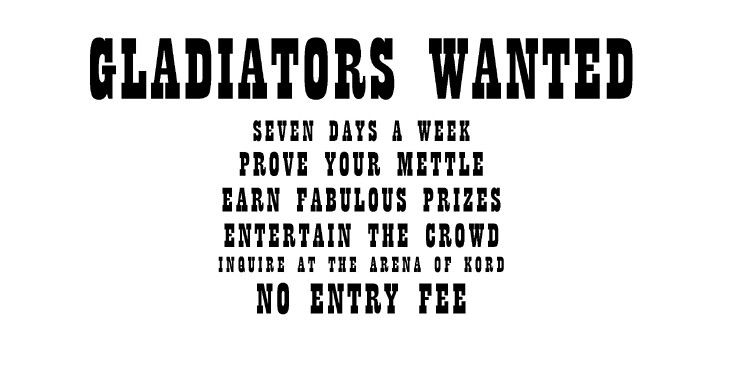
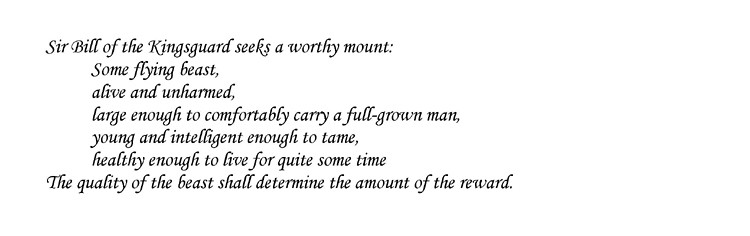
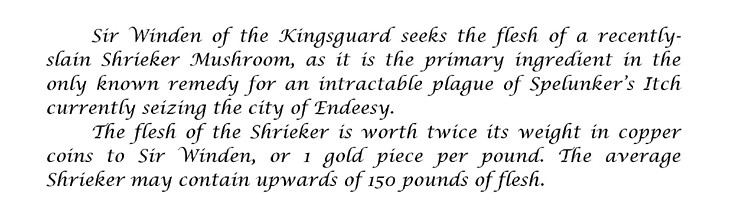
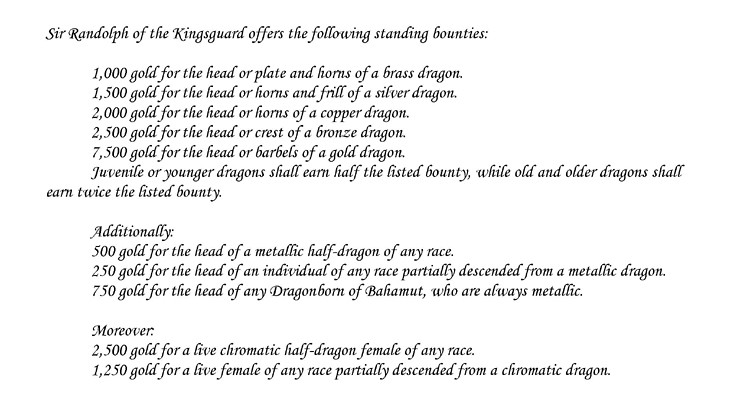
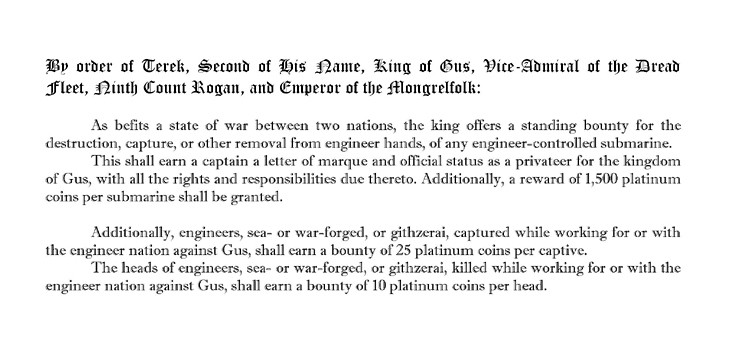
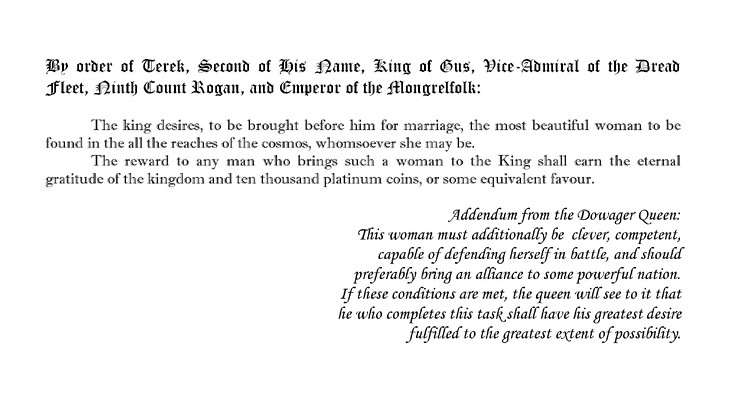
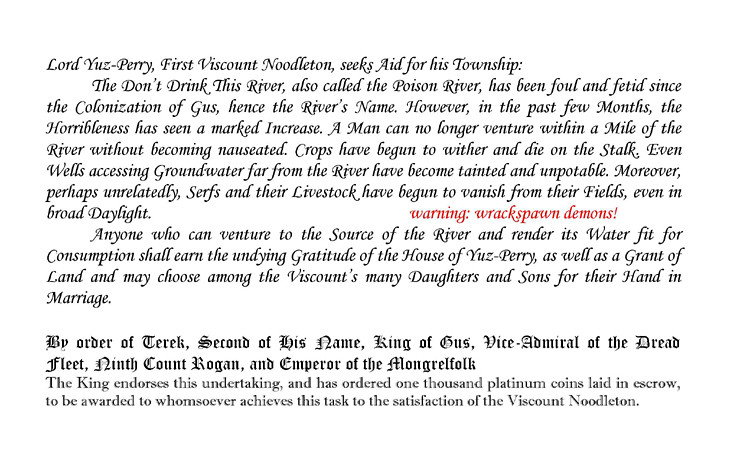
Bounties of the Megadungeon
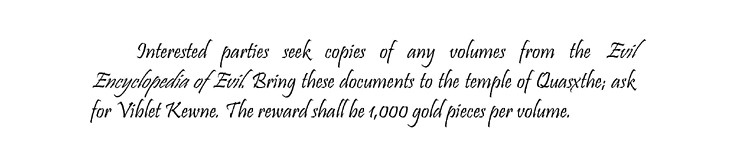
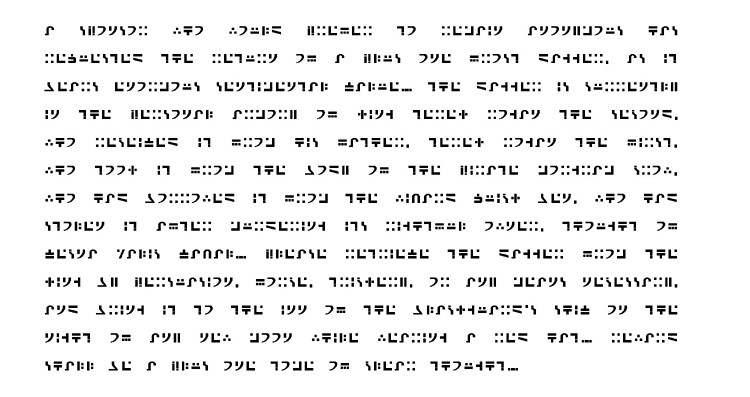
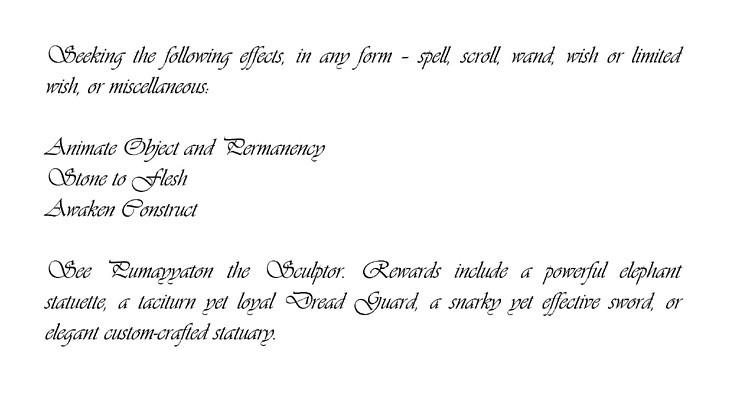
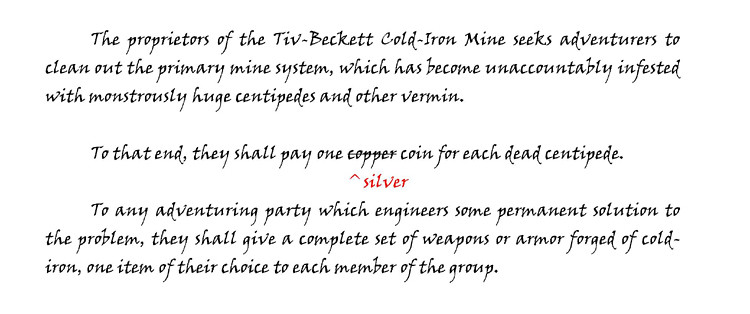
The following is a list of the current bounties offered at my megadungeon open game table, as they are presented to my players. Well, they get everything all nicely printed out on individual half-sheets of paper, but you get the idea. I hope some of them may inspire you for your own games.
Part of this is a lesson I have heard, but not entirely completely internalized: whenever possible, have something physical to hand your players. Tangible objects are supposedly much more interesting to them than mere descriptions in the air. As one hears often in Westeros: words are wind. This particular technique, the bounties on paper, suffer somewhat from still mostly just being words, though if you can interesting them up by trying to get as close as you can to the actual handwritten documents (mostly with creative font choices), that helps.
A side story: one benefit to using LaserTron tokens for mini bases: I had a couple left over (which I did paint on one side, intending to use them for swarms or miscellaneous markers or something), so when my players tried to squeeze money out of a particularly unwealthy viscount, I had five coins on hand to drop on the table and say "This is all the money I can spare".
My next idea to liven things up is to include bounties that are just pictures, no words. Not everyone who wants to post a bounty is literate, after all. Even Sir Bigglesworth counts as literate, if only barely. But this is a major challenge for the DM to try to convey instructions without using words, and to the players to understand.
---


Part of this is a lesson I have heard, but not entirely completely internalized: whenever possible, have something physical to hand your players. Tangible objects are supposedly much more interesting to them than mere descriptions in the air. As one hears often in Westeros: words are wind. This particular technique, the bounties on paper, suffer somewhat from still mostly just being words, though if you can interesting them up by trying to get as close as you can to the actual handwritten documents (mostly with creative font choices), that helps.
A side story: one benefit to using LaserTron tokens for mini bases: I had a couple left over (which I did paint on one side, intending to use them for swarms or miscellaneous markers or something), so when my players tried to squeeze money out of a particularly unwealthy viscount, I had five coins on hand to drop on the table and say "This is all the money I can spare".
My next idea to liven things up is to include bounties that are just pictures, no words. Not everyone who wants to post a bounty is literate, after all. Even Sir Bigglesworth counts as literate, if only barely. But this is a major challenge for the DM to try to convey instructions without using words, and to the players to understand.
---





Monday, July 18, 2011
Baggies of Holding
Because low-level characters being unable to carry all their gear is a recurring problem: here, have smaller bags of holding that even a newbie may be able to afford (depending on starting wealth).
---
Baggies of Holding, sometimes called Bags of Holding Type 0 and -1, act as normal bags of holding, but are even smaller and cheaper.
---
Baggies of Holding, sometimes called Bags of Holding Type 0 and -1, act as normal bags of holding, but are even smaller and cheaper.
| Bag | Bag Weight | Contents Weight Limit | Contents Volume Limit | Market Price |
| Lesser Baggie of Holding | 2 | 20 | 2 | 250 |
| Greater Baggie of Holding | 7 | 90 | 10 | 1000 |
Saturday, July 16, 2011
On the Virtues of "Yes, And"
You may have heard the virtues of "Yes, and" extolled. If not at DMing school, then perhaps at improv comedy school.
The thinking goes like this: Saying "no" to a player discourages them and makes them sad and makes them not be having as much fun. (Saying "no" to an improv comedian not only makes them sad, it also disrupts the pace of the banter and throws everyone off their game and makes the act less funny, so the parallels are only surface-deep.)
Consider the following:
"Yes, and" > "Yes" > "Yes, but" > "No, but" > "No"
Always aspire to be as far left on this list as you possibly can. Whenever you make a decree, ask yourself "is there a good reason I'm here, and not one to the left?" Going one to the left if you can will make it more fun for your player and more fun for you. (A possible exception is players who ask for all sorts of stupid things for no other reason than because they suspect you'll let them get away with it. I'm honestly not sure how to deal with this kind of player. It may be that this is the only situation in which an unadorned "no" can actually be justified.)
Certainly, there are good reasons to find yourself somewhere on the right. Some things are just broken. Leadership, for example. This core principle is why I go with the "yes, but" of nerfing it, rather than the "no" of banning it outright. Similarly, rather than banning Divine Metamagic ("no"), only ban nightstick abuse ("yes, but").
Rather than disallow all flaws, allow them and make an effort to exploit them to the fullest possible extent -- if people take Shaky, throw lots of ranged and flying enemies at them; if they take Murky-Eyed, throw them against lots of enemies with concealment (This works out to either a "yes, but" or a "yes, and", depending on the adventurousness of the player).
You want to buy 50 flasks of lamp oil? Yes, but several sessions later you may find a factotum casting a scorching ray at them.
But it's still always more fun for everyone to go as far to the left as possible. You want your character to be a prince? Yes, and also take this plot I've hung on that hook for you.
You want to buy dragonhide armor? Yes, and what colour is it in case you come across somebody who doesn't take kindly to you wearing a relative? (Is "Yes, if you provide the dragon skin" a "Yes, and", a "Yes, but", or a "No, but"? Probably depends on how plausible the party killing a dragon is at their level.)
See how much more fun that is for you, the player, and the party than just "yes"?
As of this writing, I just told a player "no, but". I'm sadly in the bad habit of saying "no, but" much more often than I ought, though I've mostly broken myself of the habit of outright "no"s. The question was "Can I use this homebrewed flaw?" and my answer was "No, but you may refluff a WotC-published flaw to achieve a similar effect." (Homebrewed flaws tend to be terrible, or as I heard them described once, "pants on head retarded", so I am more prejudiced against them than I am against other homebrew, even if an individual flaw seems non-terrible on the surface. Not that I'm not prejudiced against homebrew in general. But this is prejudice, which is why my wording was "I'd rather you didn't, though I may allow it if it's a deal-breaker" rather than a flat "no". An empty justification, perhaps.)
The other day, I got to say "yes, and", and it made me feel good. A player asked if he could use Central Casting: Heroes of Legend (which seems awesome, by the way). I said (provisionally) sure, and when he rolled up a character, I got to say "Oh, hey, 'human nomads' probably means a nation of sailors who didn't bothered to recolonize the land when the Subsidence came, and 'light cavalry' means riders of sharks or dolphins or porpoises, and 'skiing' means 'water skiing'." Lovely.
The thinking goes like this: Saying "no" to a player discourages them and makes them sad and makes them not be having as much fun. (Saying "no" to an improv comedian not only makes them sad, it also disrupts the pace of the banter and throws everyone off their game and makes the act less funny, so the parallels are only surface-deep.)
Consider the following:
"Yes, and" > "Yes" > "Yes, but" > "No, but" > "No"
Always aspire to be as far left on this list as you possibly can. Whenever you make a decree, ask yourself "is there a good reason I'm here, and not one to the left?" Going one to the left if you can will make it more fun for your player and more fun for you. (A possible exception is players who ask for all sorts of stupid things for no other reason than because they suspect you'll let them get away with it. I'm honestly not sure how to deal with this kind of player. It may be that this is the only situation in which an unadorned "no" can actually be justified.)
Certainly, there are good reasons to find yourself somewhere on the right. Some things are just broken. Leadership, for example. This core principle is why I go with the "yes, but" of nerfing it, rather than the "no" of banning it outright. Similarly, rather than banning Divine Metamagic ("no"), only ban nightstick abuse ("yes, but").
Rather than disallow all flaws, allow them and make an effort to exploit them to the fullest possible extent -- if people take Shaky, throw lots of ranged and flying enemies at them; if they take Murky-Eyed, throw them against lots of enemies with concealment (This works out to either a "yes, but" or a "yes, and", depending on the adventurousness of the player).
You want to buy 50 flasks of lamp oil? Yes, but several sessions later you may find a factotum casting a scorching ray at them.
But it's still always more fun for everyone to go as far to the left as possible. You want your character to be a prince? Yes, and also take this plot I've hung on that hook for you.
You want to buy dragonhide armor? Yes, and what colour is it in case you come across somebody who doesn't take kindly to you wearing a relative? (Is "Yes, if you provide the dragon skin" a "Yes, and", a "Yes, but", or a "No, but"? Probably depends on how plausible the party killing a dragon is at their level.)
See how much more fun that is for you, the player, and the party than just "yes"?
As of this writing, I just told a player "no, but". I'm sadly in the bad habit of saying "no, but" much more often than I ought, though I've mostly broken myself of the habit of outright "no"s. The question was "Can I use this homebrewed flaw?" and my answer was "No, but you may refluff a WotC-published flaw to achieve a similar effect." (Homebrewed flaws tend to be terrible, or as I heard them described once, "pants on head retarded", so I am more prejudiced against them than I am against other homebrew, even if an individual flaw seems non-terrible on the surface. Not that I'm not prejudiced against homebrew in general. But this is prejudice, which is why my wording was "I'd rather you didn't, though I may allow it if it's a deal-breaker" rather than a flat "no". An empty justification, perhaps.)
The other day, I got to say "yes, and", and it made me feel good. A player asked if he could use Central Casting: Heroes of Legend (which seems awesome, by the way). I said (provisionally) sure, and when he rolled up a character, I got to say "Oh, hey, 'human nomads' probably means a nation of sailors who didn't bothered to recolonize the land when the Subsidence came, and 'light cavalry' means riders of sharks or dolphins or porpoises, and 'skiing' means 'water skiing'." Lovely.
Thursday, July 14, 2011
Proper Housekeeping: How Many Rules Are Good?
There is a golden rule of houseruling that everyone should always keep in mind when they decide to enforce a house rule, and that is:
A house rule should always either a.) make the game more fun or b.) make the game more realistic while not making it less fun.
I will draw an analogy with John Stuart Mill. A (very) rough summary of Mill's ethics: Restricting freedom by declaring a thing unacceptable (e.g., passing a law against it) is inherently an evil act; the only way for banning an act to be good is if that act is more evil than the evil of banning it. Even more roughly: freedom is good and restricting freedom is evil, so the only acts it is good to restrict are those acts which restrict freedom even more. (The garuda of Perdido Street Station are explicitly Millian in this limited sense: the only crime in garuda society is "choice theft". Anything which restricts another person's choices is choice theft, and thus criminal.)
The analogy is this: a house rule is inherently an evil. Each house rule you add makes the game slightly more confusing and gives your players one more thing they need to remember. I am lawful neutral and have a strong "rules for the sake of rules" tendency, so this is a hard thing for me to keep in mind, but it's important.
So every houserule needs to have a reason to exist. As above, it needs to make the game more fun, or it needs to make the game more realistic while not making it less fun. Because houserules inherently make the game slightly less fun, this second clause should be read as "make the game more realistic while making it also slightly more fun", unless you're playing with a table full of hardcore simulationists for whom increased realism is automatically more fun (this describes me to an extent).
That said, I've decided to make an audit of all my current house rules, to make sure they all adhere to this rule.
---
• Ability scores: point buy 30, starting at 8, as on page 169 of the Dungeon Master’s Guide.
• All characters begin with 1,000 gold and an adventurer's kit containing a backpack, 5 torches, flint & steel, 50' hempen rope, a waterskin, and clothing of your choice (excluding courtier's outfit, noble's outfit, and royal outfit).
• All characters begin at 0 experience.
• Content from any 3.5e rulebook or supplement published by Wizards Of The Coast may be used (including some material for other campaign settings). Other sources -- particularly Dragon magazine, the Wizards of the Coast website, and official 3.0e sourcebooks -- may be permitted, with DM review in each instance.
• A character may have up to 2 flaws and up to 1 trait (but bear in mind that you should consider no flaw “safe”; I may deliberately throw encounters at you which prey specifically on your flaws).
These are not really "house rules" so much as they are "variables that it is necessary to define for every game". I could just say "begin play according to the PHB", with the standard 3d6 ability scores and starting wealth rolled by class, but those are rules that are so rarely used they almost count as house rules in their own right. (Plus rolling for ability scores is evil and sadistic and I would never inflict that on anyone.)
Incidentally, I picked that high starting gold amount for a reason: it's enough to get anything cheaper than a +1 weapon or armor. You can afford good stuff, increasing survivability at the painful low levels, without significantly changing balance (creatures with DR/magic will still be fully effective until after you've won a few fights, because you can't afford a magic item).
• Monster class progressions (e.g., from Savage Species) may be used. A character is not required to finish their monster class progression before entering another class; however, a character may not have more class levels than monster levels unless their monster class progression is complete. The “empty levels” that do not add hit dice may be reduced like level adjustment, as below. The experience cost to do so is determined by the final LA of the monster class.
• Bloodlines (from Unearthed Arcana) may be used. A bloodline level counts as a level adjustment and nothing more; it does not count as a class level for any purpose. However, bloodline levels may be reduced like level adjustment, as below. The experience cost to do so is determined by the bloodline strength (+1 for Minor, +2 for Intermediate, +3 for Major).
These are partially laying out some specific things that I will allow and which not every DM does. So, again, variables that need to be defined for each game, rather than house rules. They also lay out some minor changes and adjustments.
The "empty levels are level adjustment" thing is simply making explicit something that was previously implicit, so not even really a house rule, per se, because it's not even really a change.
The "bloodline levels are level adjustment" are making simple something that was unnecessarily complicated. The game already has class levels and hit dice and level adjustment (which are confusing enough), and Unearthed Arcana saw fit to create a new category that nothing else uses? Pshaw. Just use one of the existing ones. So this increases fun by leading to a net decrease in complexity.
• A character may have up to two base classes without an experience penalty, or three if one of them is their racial favored class (or if their racial favored class is “any”). After that, experience penalties for multi-classing apply.
I'm starting to rethink this rule. When I instituted it, I hadn't realized that prestige classes don't count towards experience penalties. With that in mind, the default rule seems fine - you get a class plus your racial favored class, which should be plenty for anybody who isn't going some bizarre build that calls for dipping half a dozen different classes.
I do want to discourage said bizarre builds, so I don't want to just say "no experience penalties for multiclassing ever" like most DMs do. Being restricted to one or two base classes is a little harsh, though - sometimes a 1-level dip is just the thing to make a build even playable. So two or three is a fine number.
But the bookkeeping for XP penalties if anybody actually does choose to go with such a build is a nightmare, so I don't want it to ever happen. If I really want to discourage such bizarre builds, I should just say you're not allowed to play a character with more than a certain number of base classes. However, the very fact that the bookkeeping for these XP penalties is such a nightmare will automatically prevent 99% of players from even bothering with them, so the problem solves itself.
In short: not using the penalties would be going too far, and keeping them as-is isn't any fun, so I think this compromise does fall into the "makes the game more fun" zone.
• A modified version of Unearthed Arcana’s variant rule for reducing level adjustment may be used. A character’s level adjustment may be reduced at any time (including at character creation), provided the character has enough experience. You may spend as much experience as you desire, but your total experience cannot go below zero. Your class levels are never reduced in this way, no matter how much experience you spend.
Starting LA : XP Cost
1 : 6,000
2 : 11,000; 13,000
3 : 16,000; 21,000; 23,000
4 : 21,000; 29,000; 34,000; 36,000
5 : 26,000; 37,000; 45,000; 50,000; 52,000
6 : 31,000; 45,000; 56,000; 64,000; 69,000; 71,000
7 : 36,000; 53,000; 67,000; 78,000; 86,000; 91,000; 93,000
8 : 41,000; 61,000; 78,000; 92,000; 103,000; 111,000; 116,000; 118,000
9 : 46,000; 69,000; 89,000; 106,000; 120,000; 131,000; 139,000; 144,000; 146,000
For example, a character with a +3 level adjust may reduce it to +2 by spending 16,000 XP, to +1 by spending another 21,000, and to +0 by spending another 23,000.
This... I unfortunately haven't had a chance to test this system extensively. It does, however, simplify and streamline the baffling-even-once-you-understand-it Unearthed Arcana system (the UA writers must have had a fetish for needlessly complex house rules), making it probably a good house rule.
• If your name is in the "Player Name" field of a sheet, only you may play that character. If there is no name in that field, anybody may play that character. You may claim or unclaim a character at any time.
I'm actually considering doing away with this rule, and saying that pregen characters are always fair game for anybody to play. But what if a player gets really attached to one? (Unlikely, I know, what with the players not having had a hand in their creation.) So this rule is definitely a candidate for deletion.
• A character is considered dead if he reaches negative his Constitution score or negative 10, whichever is further from zero.
I play with this rule because I played with it in the first game I played in. But what's the point of it? It doesn't make the game any more realistic (high constitution already means you're less likely to die, you've already got an extra hit point for every two points of constitution you have, plus it adds to your fortitude saves.) It makes a character slightly less likely to die in one hit if they're low on HP, which is I suppose good, but is it worth making a house rule about it, given the John Stuart Mill analogy? I don't think so. Definitely a candidate for deletion.
• An attack roll of 1 is a threat for a critical miss, which works just like the inverse of a threat for a critical hit: you roll to confirm the fumble, and if your confirmation roll would miss your target, you have critically fumbled.
If you critical fumble on the last attack you would make on your turn, various bad things happen (e.g.: you hit yourself or an ally, your weapon breaks, etc). If you still have attacks left to make when you critical fumble, you lose them, but nothing else bad happens.
The grounds on which people object to critical fumbles (usually "it makes no sense for you to be more likely to hurt yourself as you level up") apply only to unadorned "you hit yourself if you roll a 1". Everything about this rule is designed to answer that objection, and it does so admirably. But does critical fumbling as a concept actually improve the game?
Yes! I refer you to the tales my players still tell of excessively powerful monsters biting themselves to death in the chaotic throes of combat. And isn't the ability to tell stories of your exploits the point of D&D? The critical fumble rule stays.
• The reincarnate spell chooses randomly from custom lists. A creature is overwhelmingly likely to be reincarnated as a creature of its type and somewhat less likely to be reincarnated as a creature of a different but similar type.
Gender is random. The original form's racial hit dice and level adjustment are removed. Half the experience points for any previously paid off level adjustment are immediately refunded to the character. If a character is reincarnated as a creature with more than one racial hit die and/or a level adjustment, the racial hit dice and level adjustment are applied to the character. If a creature doesn’t like its new form, it has the option of refusing to return, in which case the spell is wasted, as with any resurrection spell.
• The experience of dying and returning to life leaves a person drained of vitality even beyond the loss of a level. Upon resurrection, a character is aged a number of years equal to 1d20 minus their Constitution modifier (a negative Constitution modifier can increase the number of years aged). The True Resurrection spell negates this effect. These years are added to the base adult age in the case of the Reincarnate spell.
The former of these makes the game both more fun (though many people will argue that allowing Reincarnate at all makes the game less fun; these people are spoilsports) and more realistic (living constructs, native outsiders, and monstrous humanoids coming back as humanoids? engineers not having a chance to come back as engineers? Nonsense!). It stays.
The latter is an attempt to stave off the revolving door of death, which enough people complain about that it seems to be something that makes it more fun for some. That makes it good. It helps that rules for resurrection and reincarnation will only be used very rarely, so they're not something the PCs really have to keep in mind.
• A wizard may copy any arcane scroll into his spellbook, even if it is not on the Wizard class list. However, to do so he must pass an additional Use Magic Device check as if he were casting the spell from the scroll. The Archivist must do the same for spells which are not on the Cleric class list.
This isn't so much a house rule as it is an answer to a question that actually did come up. Only wizards and archivists even need to pay attention to it.
• There are no negative levels. In place of each negative level bestowed, the victim immediately ages 3d10 years. The victim may immediately roll a fortitude saving throw at the same difficulty as removing the negative level; if this saving throw succeeds, the aging is halved. If the victim receives a restoration spell within 24 hours, the aging is reversed; otherwise, it is permanent.
This makes the game more fun (nobody likes negative levels). I guess nobody can really describe the effect of having your life sucked out by an undead monster, so it doesn't really alter the "realism" scale.
• When crafting an item or casting a spell with an experience component, you may spend as much experience as you have, but your total experience cannot go below zero. Your class levels are never reduced in this way, no matter how much experience you spend.
This: probably unnecessary. I don't know that it makes the game more fun at all. I could drop it, though it would require altering the level adjustment reduction rules for consistency. Definitely a candidate for deletion.
• Participants in combat act on a shared initiative. Each member of each group (usually there are two groups: the PCs, and whatever they are fighting) rolls initiative and reports the highest initiative from each group.
In cases where there would be a surprise round, initiative is not rolled. The surprising party simply goes first, and the surprised party begins combat flat-footed.
As far as I've been able to tell so far, this house rule improves the game. It certainly speeds it up, though I have several players who don't seem to understand the principle of it at all and simply wait until everybody else has gone. I'm hoping eventually the principle of coöperation will click in everybody's minds.
• If you are a prepared caster, casting a level 0 spell does not remove it from your mind. If you are a spontaneous caster, casting a level 0 spell does not use up a spell slot.
This does not apply to Cure Minor Wounds or Repair Minor Damage, nor does it apply to any spell-like abilities. If you use a level 0 spell or spell slot to do anything other than cast that particular spell (e.g., spontaneously cast Inflict Minor Wounds by sacrificing a different spell), it still unprepares the spell/uses the spell slot. If you apply a metamagic effect to a level 0 spell, casting it unprepares the spell/uses the spell slot, even if it doesn't change the spell's level.
This: also probably unnecessary. You can accomplish much the same end by just taking reserve feats. Who actually runs out of 0-level spells, anyway? Does that happen? Are 0-level spells so useful people are in danger of running out of them?
A house rule should always either a.) make the game more fun or b.) make the game more realistic while not making it less fun.
I will draw an analogy with John Stuart Mill. A (very) rough summary of Mill's ethics: Restricting freedom by declaring a thing unacceptable (e.g., passing a law against it) is inherently an evil act; the only way for banning an act to be good is if that act is more evil than the evil of banning it. Even more roughly: freedom is good and restricting freedom is evil, so the only acts it is good to restrict are those acts which restrict freedom even more. (The garuda of Perdido Street Station are explicitly Millian in this limited sense: the only crime in garuda society is "choice theft". Anything which restricts another person's choices is choice theft, and thus criminal.)
The analogy is this: a house rule is inherently an evil. Each house rule you add makes the game slightly more confusing and gives your players one more thing they need to remember. I am lawful neutral and have a strong "rules for the sake of rules" tendency, so this is a hard thing for me to keep in mind, but it's important.
So every houserule needs to have a reason to exist. As above, it needs to make the game more fun, or it needs to make the game more realistic while not making it less fun. Because houserules inherently make the game slightly less fun, this second clause should be read as "make the game more realistic while making it also slightly more fun", unless you're playing with a table full of hardcore simulationists for whom increased realism is automatically more fun (this describes me to an extent).
That said, I've decided to make an audit of all my current house rules, to make sure they all adhere to this rule.
---
• Ability scores: point buy 30, starting at 8, as on page 169 of the Dungeon Master’s Guide.
• All characters begin with 1,000 gold and an adventurer's kit containing a backpack, 5 torches, flint & steel, 50' hempen rope, a waterskin, and clothing of your choice (excluding courtier's outfit, noble's outfit, and royal outfit).
• All characters begin at 0 experience.
• Content from any 3.5e rulebook or supplement published by Wizards Of The Coast may be used (including some material for other campaign settings). Other sources -- particularly Dragon magazine, the Wizards of the Coast website, and official 3.0e sourcebooks -- may be permitted, with DM review in each instance.
• A character may have up to 2 flaws and up to 1 trait (but bear in mind that you should consider no flaw “safe”; I may deliberately throw encounters at you which prey specifically on your flaws).
These are not really "house rules" so much as they are "variables that it is necessary to define for every game". I could just say "begin play according to the PHB", with the standard 3d6 ability scores and starting wealth rolled by class, but those are rules that are so rarely used they almost count as house rules in their own right. (Plus rolling for ability scores is evil and sadistic and I would never inflict that on anyone.)
Incidentally, I picked that high starting gold amount for a reason: it's enough to get anything cheaper than a +1 weapon or armor. You can afford good stuff, increasing survivability at the painful low levels, without significantly changing balance (creatures with DR/magic will still be fully effective until after you've won a few fights, because you can't afford a magic item).
• Monster class progressions (e.g., from Savage Species) may be used. A character is not required to finish their monster class progression before entering another class; however, a character may not have more class levels than monster levels unless their monster class progression is complete. The “empty levels” that do not add hit dice may be reduced like level adjustment, as below. The experience cost to do so is determined by the final LA of the monster class.
• Bloodlines (from Unearthed Arcana) may be used. A bloodline level counts as a level adjustment and nothing more; it does not count as a class level for any purpose. However, bloodline levels may be reduced like level adjustment, as below. The experience cost to do so is determined by the bloodline strength (+1 for Minor, +2 for Intermediate, +3 for Major).
These are partially laying out some specific things that I will allow and which not every DM does. So, again, variables that need to be defined for each game, rather than house rules. They also lay out some minor changes and adjustments.
The "empty levels are level adjustment" thing is simply making explicit something that was previously implicit, so not even really a house rule, per se, because it's not even really a change.
The "bloodline levels are level adjustment" are making simple something that was unnecessarily complicated. The game already has class levels and hit dice and level adjustment (which are confusing enough), and Unearthed Arcana saw fit to create a new category that nothing else uses? Pshaw. Just use one of the existing ones. So this increases fun by leading to a net decrease in complexity.
• A character may have up to two base classes without an experience penalty, or three if one of them is their racial favored class (or if their racial favored class is “any”). After that, experience penalties for multi-classing apply.
I'm starting to rethink this rule. When I instituted it, I hadn't realized that prestige classes don't count towards experience penalties. With that in mind, the default rule seems fine - you get a class plus your racial favored class, which should be plenty for anybody who isn't going some bizarre build that calls for dipping half a dozen different classes.
I do want to discourage said bizarre builds, so I don't want to just say "no experience penalties for multiclassing ever" like most DMs do. Being restricted to one or two base classes is a little harsh, though - sometimes a 1-level dip is just the thing to make a build even playable. So two or three is a fine number.
But the bookkeeping for XP penalties if anybody actually does choose to go with such a build is a nightmare, so I don't want it to ever happen. If I really want to discourage such bizarre builds, I should just say you're not allowed to play a character with more than a certain number of base classes. However, the very fact that the bookkeeping for these XP penalties is such a nightmare will automatically prevent 99% of players from even bothering with them, so the problem solves itself.
In short: not using the penalties would be going too far, and keeping them as-is isn't any fun, so I think this compromise does fall into the "makes the game more fun" zone.
• A modified version of Unearthed Arcana’s variant rule for reducing level adjustment may be used. A character’s level adjustment may be reduced at any time (including at character creation), provided the character has enough experience. You may spend as much experience as you desire, but your total experience cannot go below zero. Your class levels are never reduced in this way, no matter how much experience you spend.
Starting LA : XP Cost
1 : 6,000
2 : 11,000; 13,000
3 : 16,000; 21,000; 23,000
4 : 21,000; 29,000; 34,000; 36,000
5 : 26,000; 37,000; 45,000; 50,000; 52,000
6 : 31,000; 45,000; 56,000; 64,000; 69,000; 71,000
7 : 36,000; 53,000; 67,000; 78,000; 86,000; 91,000; 93,000
8 : 41,000; 61,000; 78,000; 92,000; 103,000; 111,000; 116,000; 118,000
9 : 46,000; 69,000; 89,000; 106,000; 120,000; 131,000; 139,000; 144,000; 146,000
For example, a character with a +3 level adjust may reduce it to +2 by spending 16,000 XP, to +1 by spending another 21,000, and to +0 by spending another 23,000.
This... I unfortunately haven't had a chance to test this system extensively. It does, however, simplify and streamline the baffling-even-once-you-understand-it Unearthed Arcana system (the UA writers must have had a fetish for needlessly complex house rules), making it probably a good house rule.
• If your name is in the "Player Name" field of a sheet, only you may play that character. If there is no name in that field, anybody may play that character. You may claim or unclaim a character at any time.
I'm actually considering doing away with this rule, and saying that pregen characters are always fair game for anybody to play. But what if a player gets really attached to one? (Unlikely, I know, what with the players not having had a hand in their creation.) So this rule is definitely a candidate for deletion.
• A character is considered dead if he reaches negative his Constitution score or negative 10, whichever is further from zero.
I play with this rule because I played with it in the first game I played in. But what's the point of it? It doesn't make the game any more realistic (high constitution already means you're less likely to die, you've already got an extra hit point for every two points of constitution you have, plus it adds to your fortitude saves.) It makes a character slightly less likely to die in one hit if they're low on HP, which is I suppose good, but is it worth making a house rule about it, given the John Stuart Mill analogy? I don't think so. Definitely a candidate for deletion.
• An attack roll of 1 is a threat for a critical miss, which works just like the inverse of a threat for a critical hit: you roll to confirm the fumble, and if your confirmation roll would miss your target, you have critically fumbled.
If you critical fumble on the last attack you would make on your turn, various bad things happen (e.g.: you hit yourself or an ally, your weapon breaks, etc). If you still have attacks left to make when you critical fumble, you lose them, but nothing else bad happens.
The grounds on which people object to critical fumbles (usually "it makes no sense for you to be more likely to hurt yourself as you level up") apply only to unadorned "you hit yourself if you roll a 1". Everything about this rule is designed to answer that objection, and it does so admirably. But does critical fumbling as a concept actually improve the game?
Yes! I refer you to the tales my players still tell of excessively powerful monsters biting themselves to death in the chaotic throes of combat. And isn't the ability to tell stories of your exploits the point of D&D? The critical fumble rule stays.
• The reincarnate spell chooses randomly from custom lists. A creature is overwhelmingly likely to be reincarnated as a creature of its type and somewhat less likely to be reincarnated as a creature of a different but similar type.
Gender is random. The original form's racial hit dice and level adjustment are removed. Half the experience points for any previously paid off level adjustment are immediately refunded to the character. If a character is reincarnated as a creature with more than one racial hit die and/or a level adjustment, the racial hit dice and level adjustment are applied to the character. If a creature doesn’t like its new form, it has the option of refusing to return, in which case the spell is wasted, as with any resurrection spell.
• The experience of dying and returning to life leaves a person drained of vitality even beyond the loss of a level. Upon resurrection, a character is aged a number of years equal to 1d20 minus their Constitution modifier (a negative Constitution modifier can increase the number of years aged). The True Resurrection spell negates this effect. These years are added to the base adult age in the case of the Reincarnate spell.
The former of these makes the game both more fun (though many people will argue that allowing Reincarnate at all makes the game less fun; these people are spoilsports) and more realistic (living constructs, native outsiders, and monstrous humanoids coming back as humanoids? engineers not having a chance to come back as engineers? Nonsense!). It stays.
The latter is an attempt to stave off the revolving door of death, which enough people complain about that it seems to be something that makes it more fun for some. That makes it good. It helps that rules for resurrection and reincarnation will only be used very rarely, so they're not something the PCs really have to keep in mind.
• A wizard may copy any arcane scroll into his spellbook, even if it is not on the Wizard class list. However, to do so he must pass an additional Use Magic Device check as if he were casting the spell from the scroll. The Archivist must do the same for spells which are not on the Cleric class list.
This isn't so much a house rule as it is an answer to a question that actually did come up. Only wizards and archivists even need to pay attention to it.
• There are no negative levels. In place of each negative level bestowed, the victim immediately ages 3d10 years. The victim may immediately roll a fortitude saving throw at the same difficulty as removing the negative level; if this saving throw succeeds, the aging is halved. If the victim receives a restoration spell within 24 hours, the aging is reversed; otherwise, it is permanent.
This makes the game more fun (nobody likes negative levels). I guess nobody can really describe the effect of having your life sucked out by an undead monster, so it doesn't really alter the "realism" scale.
• When crafting an item or casting a spell with an experience component, you may spend as much experience as you have, but your total experience cannot go below zero. Your class levels are never reduced in this way, no matter how much experience you spend.
This: probably unnecessary. I don't know that it makes the game more fun at all. I could drop it, though it would require altering the level adjustment reduction rules for consistency. Definitely a candidate for deletion.
• Participants in combat act on a shared initiative. Each member of each group (usually there are two groups: the PCs, and whatever they are fighting) rolls initiative and reports the highest initiative from each group.
In cases where there would be a surprise round, initiative is not rolled. The surprising party simply goes first, and the surprised party begins combat flat-footed.
As far as I've been able to tell so far, this house rule improves the game. It certainly speeds it up, though I have several players who don't seem to understand the principle of it at all and simply wait until everybody else has gone. I'm hoping eventually the principle of coöperation will click in everybody's minds.
• If you are a prepared caster, casting a level 0 spell does not remove it from your mind. If you are a spontaneous caster, casting a level 0 spell does not use up a spell slot.
This does not apply to Cure Minor Wounds or Repair Minor Damage, nor does it apply to any spell-like abilities. If you use a level 0 spell or spell slot to do anything other than cast that particular spell (e.g., spontaneously cast Inflict Minor Wounds by sacrificing a different spell), it still unprepares the spell/uses the spell slot. If you apply a metamagic effect to a level 0 spell, casting it unprepares the spell/uses the spell slot, even if it doesn't change the spell's level.
This: also probably unnecessary. You can accomplish much the same end by just taking reserve feats. Who actually runs out of 0-level spells, anyway? Does that happen? Are 0-level spells so useful people are in danger of running out of them?
Tuesday, July 12, 2011
Monster PCs in the Open Game Table
So it was established that the best way to handle experience in the open gaming table is to just start everybody off at 0 and go from there, it sorts itself out.
But, I fool that I am, thought to myself, "But this kind of makes players unable to play characters with level adjustments or racial hit dice." Sure, there are various monster class progressions (and if you want to play a character that doesn't have a published monster class progression, I can just make one). But what of +1LA or +2LA? It would be awfully silly to make a one-level 0HD class progression, I'm not even sure how it would work (start with a racial hit die and then once you've completed the monster class progression you can switch it out for a class level? Inelegant).
And it's not great to just say you can start at 0XP with +1 or +2LA, because then you're stronger than the other characters for free and there's no reason not to do that, unless you don't want to deal with LA later on.
So I decided on this compromise: if you've got a character to level n, you may make a new character at 0XP but at level n, as long as n-1 of those levels are racial hit dice or level adjustment.
Sounds reasonable, right? Nope! Of the two players who have decided to take advantage of this offer so far, neither got it right. One missed the second part and made a character with two class levels (which I provisionally allowed because they were cleric and barbarian, so the character wasn't really actually much stronger than a level 1 character). The other made a character with a monster class level and a regular class level (which I'm allowing, as long as your monster levels are equal to or greater than your class levels, until you finish the monster progression), but didn't actually have a level 2 character in the first place (which I allowed, but the character conveniently died and was resurrected in the first session in which he was played). This is, uh, not auspicious. I'm going to call this policy a failed experiment and do away with it.
What to replace it with? Maybe nothing. Or maybe I'll do what Vaxia did (with pretty much great success) and say that, if you choose to permanently retire a character (e.g., if the character dies, or you grow so bored of them you know you'll never play them again) you can transfer 75% of their experience to a brand-new character. (In Vaxia, you could also transfer the experience to an existing character, but only in the form of banked XP that you had to work off through RP in order to earn. D&D doesn't really have a mechanic like that, so I'd just say brand-new characters only.)
But, I fool that I am, thought to myself, "But this kind of makes players unable to play characters with level adjustments or racial hit dice." Sure, there are various monster class progressions (and if you want to play a character that doesn't have a published monster class progression, I can just make one). But what of +1LA or +2LA? It would be awfully silly to make a one-level 0HD class progression, I'm not even sure how it would work (start with a racial hit die and then once you've completed the monster class progression you can switch it out for a class level? Inelegant).
And it's not great to just say you can start at 0XP with +1 or +2LA, because then you're stronger than the other characters for free and there's no reason not to do that, unless you don't want to deal with LA later on.
So I decided on this compromise: if you've got a character to level n, you may make a new character at 0XP but at level n, as long as n-1 of those levels are racial hit dice or level adjustment.
Sounds reasonable, right? Nope! Of the two players who have decided to take advantage of this offer so far, neither got it right. One missed the second part and made a character with two class levels (which I provisionally allowed because they were cleric and barbarian, so the character wasn't really actually much stronger than a level 1 character). The other made a character with a monster class level and a regular class level (which I'm allowing, as long as your monster levels are equal to or greater than your class levels, until you finish the monster progression), but didn't actually have a level 2 character in the first place (which I allowed, but the character conveniently died and was resurrected in the first session in which he was played). This is, uh, not auspicious. I'm going to call this policy a failed experiment and do away with it.
What to replace it with? Maybe nothing. Or maybe I'll do what Vaxia did (with pretty much great success) and say that, if you choose to permanently retire a character (e.g., if the character dies, or you grow so bored of them you know you'll never play them again) you can transfer 75% of their experience to a brand-new character. (In Vaxia, you could also transfer the experience to an existing character, but only in the form of banked XP that you had to work off through RP in order to earn. D&D doesn't really have a mechanic like that, so I'd just say brand-new characters only.)
Subscribe to:
Posts (Atom)